A Demonstration or a Verbal Cue: Two Ways into a New Movement
Choose a demonstration or verbal cue for a new movement, direct attention to one useful detail and make the next attempt easier to interpret.
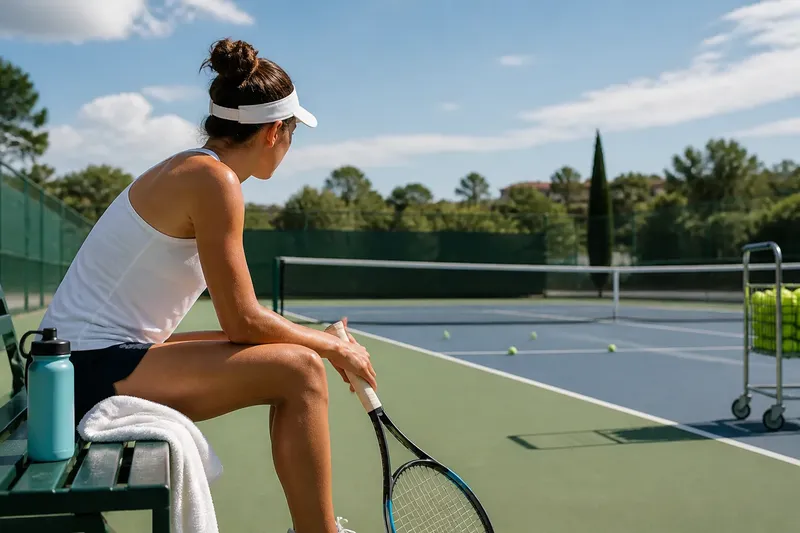
At the tennis court, a beginner watches an instructor serve, then hears, “Reach up before you swing.” A demonstration or verbal cue can both help, but they direct attention to different details. The choice is less about watching versus listening than about what the learner needs to notice first.
Use the movement, the learner’s familiarity and the next attempt to choose. The aim is not to copy every detail or memorise a slogan, but to make one useful part of the action easier to perceive and practise.
What does a demonstration make visible?
A demonstration presents an action as a moving whole. You can see how one part leads into another: a hand starts low, rises, then turns; a foot shifts as the body changes direction. That sequence can be hard to describe in a sentence, especially when timing matters as much as the final position.
Watch for the movement’s broad shape before trying to reproduce small details. Notice where the action begins, where it changes direction and what marks its finish. A view from the side may reveal a bend or forward shift; a view from behind may make alignment easier to see. If the instructor blocks the detail you need, ask for another angle or a slower demonstration.
Watching a fluent performance can leave you with a general impression but no clear idea of what to do. The instructor may move smoothly through several linked actions while you are still trying to identify the starting position. A demonstration is most useful when the feature that matters is visible and the learner knows to look for it.
What does a verbal cue direct you towards?
A verbal cue narrows attention to one detail. “Keep your eyes on the ball” points to where to look; “press through the floor” gives a simple image for how to use the feet. A brief prompt can stay in mind while the movement is under way, whereas a long explanation is easy to lose in the middle of acting.
Choose words that name an observable feature or suggest a clear action. “Land quietly” gives a learner something they can notice; “use better technique” does not say what to change. A cue can also direct attention outwards, towards an effect or target, rather than inwards towards a body part. The useful wording depends on the task and the learner’s understanding of the phrase.
Keep a cue short enough to recall without turning it into a chant that competes with the movement. If the learner has to decode unfamiliar terms, the instruction may add a language problem instead of clarifying the action. The best cue is not necessarily the most technical one; it is the one the learner can act on.
When should you watch before trying?
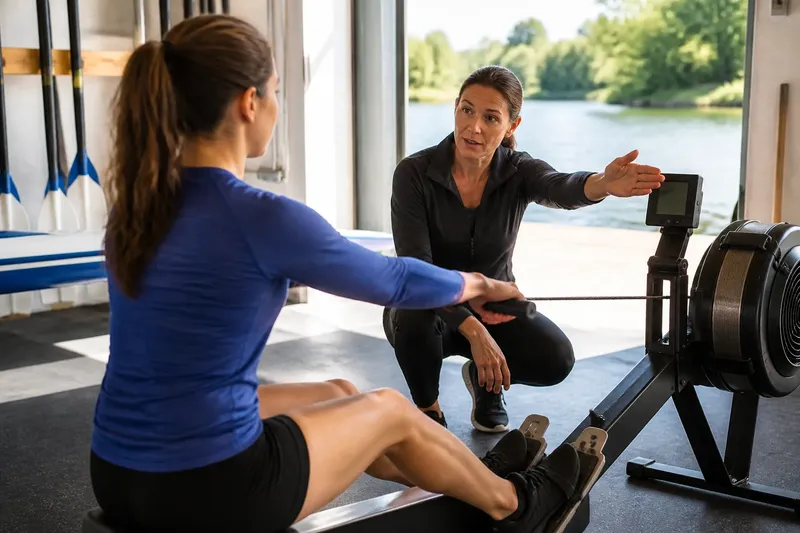
Start with a demonstration when the movement has a distinctive shape, sequence or rhythm that is difficult to picture from words alone. This may suit a beginner learning a dance turn, a throwing action or the coordinated pattern of a rowing stroke. The visible model gives the learner a rough map before they begin.
Ask the demonstrator to show the action at a pace that makes its phases easy to distinguish. A full-speed performance can communicate the overall feel but may hide a transition. If it suits the task, one clear performance followed by a slower view can show both the whole pattern and a specific change. Tell the learner what to watch for instead of simply saying, “Pay attention.”
Imagine a beginner learning to fold a paper glider. The instructor shows the full sequence, then repeats the turn that sets the wings. The beginner tries the folds in order and can see where the shape changes. The expected observable result is a fold that follows the intended sequence, rather than a collection of disconnected hand movements.
When is one short cue a better first prompt?
Use a verbal cue when the learner understands the broad action but misses one important feature. A runner who knows how to start may need a prompt to push away from the line; someone practising a balance may need to keep their gaze on a steady point. The cue focuses the next attempt without adding a demonstration to interpret.
A cue can also help when a visible model is ambiguous. Different bodies may perform the same task with slightly different-looking movements, and copying an instructor’s exact stance may not suit every learner. A prompt aimed at the task’s purpose can preserve the useful idea while leaving room for individual movement.
Do not pile up several instructions at once. “Lift your chin, square your shoulders, tighten your stomach and shift your weight” asks the learner to monitor too many things during one action. Choose the detail that matters most now; save other refinements for later if they are needed.
How can you combine a model and a cue?
Pair a brief demonstration with one cue when the learner needs both a picture of the action and a pointer to its most important feature. Before the model, name the detail to notice. After it, use the same phrase as the learner begins. Consistent wording helps connect what was seen with what is being attempted.
Say you are teaching someone to make a gentle underarm throw towards a bucket. Show the motion once and ask them to watch the hand travel forwards; then, as they prepare, say, “Send your hand towards the bucket.” The expected observable result is a clearer forward path. The learner can notice that path without being asked to copy every movement in the demonstrator’s arm or stance.
Keep the demonstration and cue in agreement. If the model emphasises one action while the words name another, the learner may not know which to follow. Avoid explaining every visible detail after a demonstration, too. One useful connection is easier to carry into the movement than a catalogue of corrections.
What should you notice after the attempt?
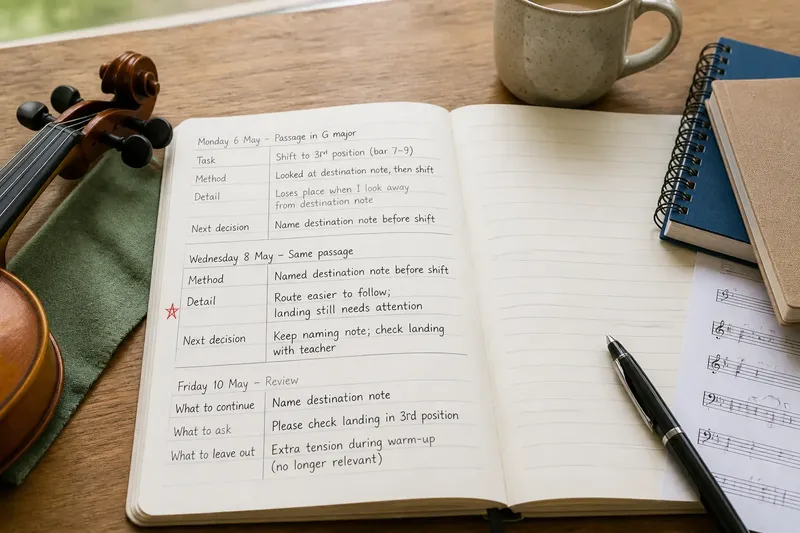
Look for the detail the guidance was meant to direct. Did the learner begin in the intended position, follow the visible sequence or orient towards the stated target? Describe what happened in plain language. “Your hand travelled forwards” is more informative than “That looked better” because it identifies an observable feature.
Then decide whether to retain, adjust or remove the prompt. If the learner repeats the relevant feature without a reminder, another cue may not be necessary. If the phrase was misunderstood, change the wording rather than repeating it more insistently. If the learner could not see the demonstrated detail, change the angle or show only the relevant part.
Keep attention on the learner’s movement, not on whether they can recite the instruction. A person may perform a movement effectively without being able to explain it in technical language. Ask what they noticed only when the answer will help select the next prompt.
Which prompt suits this movement?
Should a beginner copy the whole demonstration?
Not necessarily. Invite them to notice one or two defining features, such as the starting position and direction of travel, then let them attempt the action in their own way.
Can the same verbal cue work for every learner?
A phrase may be clear to one person and confusing to another. If the learner hesitates or performs an unrelated action, try simpler words that point to something they can see or feel.
Should you demonstrate in slow motion?
Slow movement can make a transition easier to inspect, but it can also make a quick action look unlike its natural form. Use a slower view to reveal a detail, then show the complete action at a pace that makes its overall rhythm clear.
What if a learner prefers to hear rather than watch?
Offer a concise verbal prompt and check whether it gives them a usable focus. A preference can guide the first attempt, while the learner’s response helps you decide whether to add a demonstration.
What is not worth the effort?
It is rarely useful to make a beginner memorise a long technical description before they have a working picture of the movement. Nor is it necessary to provide a demonstration, several cues and a detailed explanation all at once. That can scatter attention across details the learner cannot yet use.
Choose one entry point: show the movement, name a useful cue, or connect the two. The best first prompt is the one that makes the next attempt easier to read. For a new movement, that may mean using a demonstration or a verbal cue alone; for another, a brief combination may be clearer.
When choosing a demonstration or verbal cue, make the focus specific and observable. A learner who knows what to look for—or what to try—has a clearer starting point for the next movement.